Plantation registration
Registration of our agarwood plantations with the forest authorities in Assam.
Certificate to be published
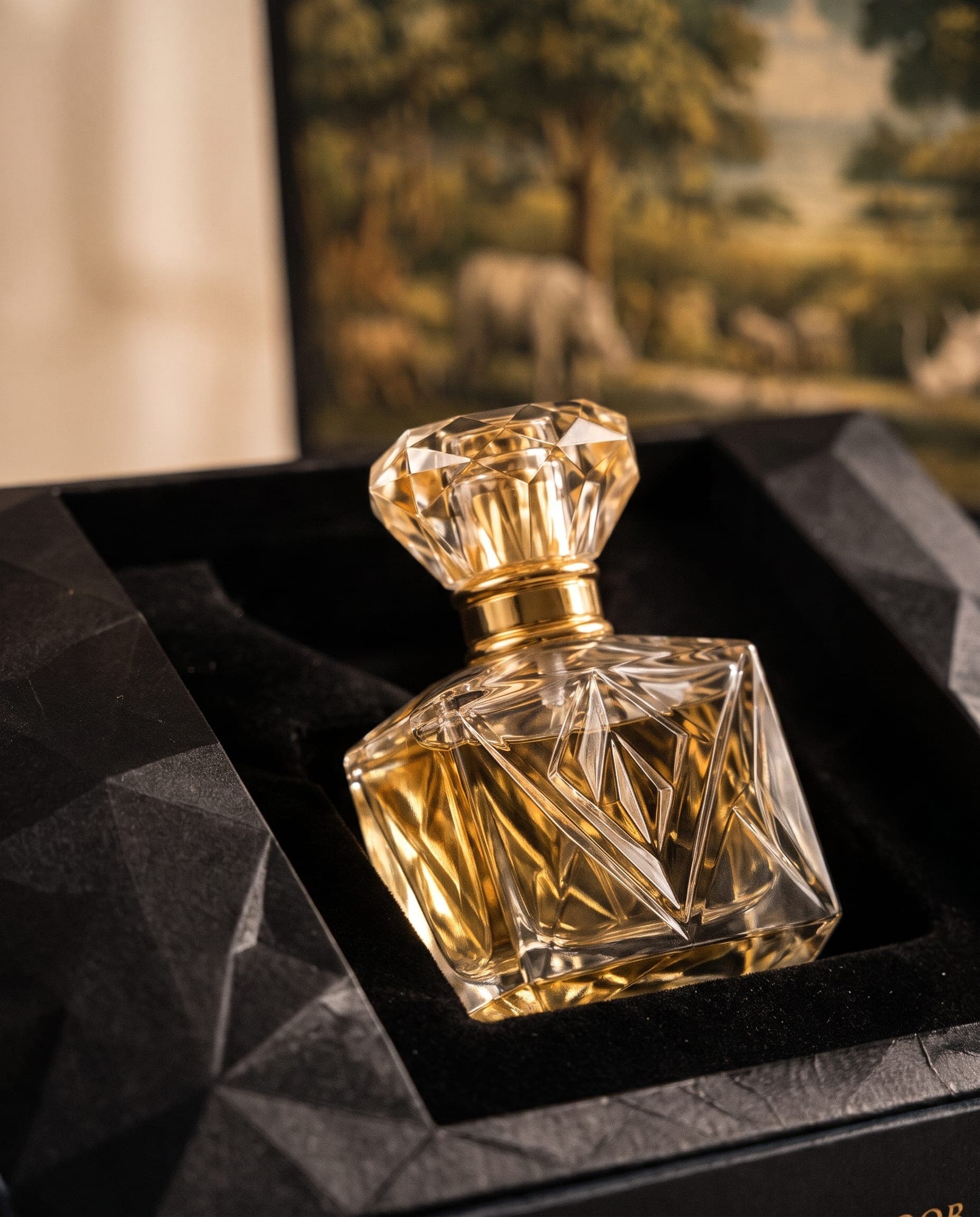
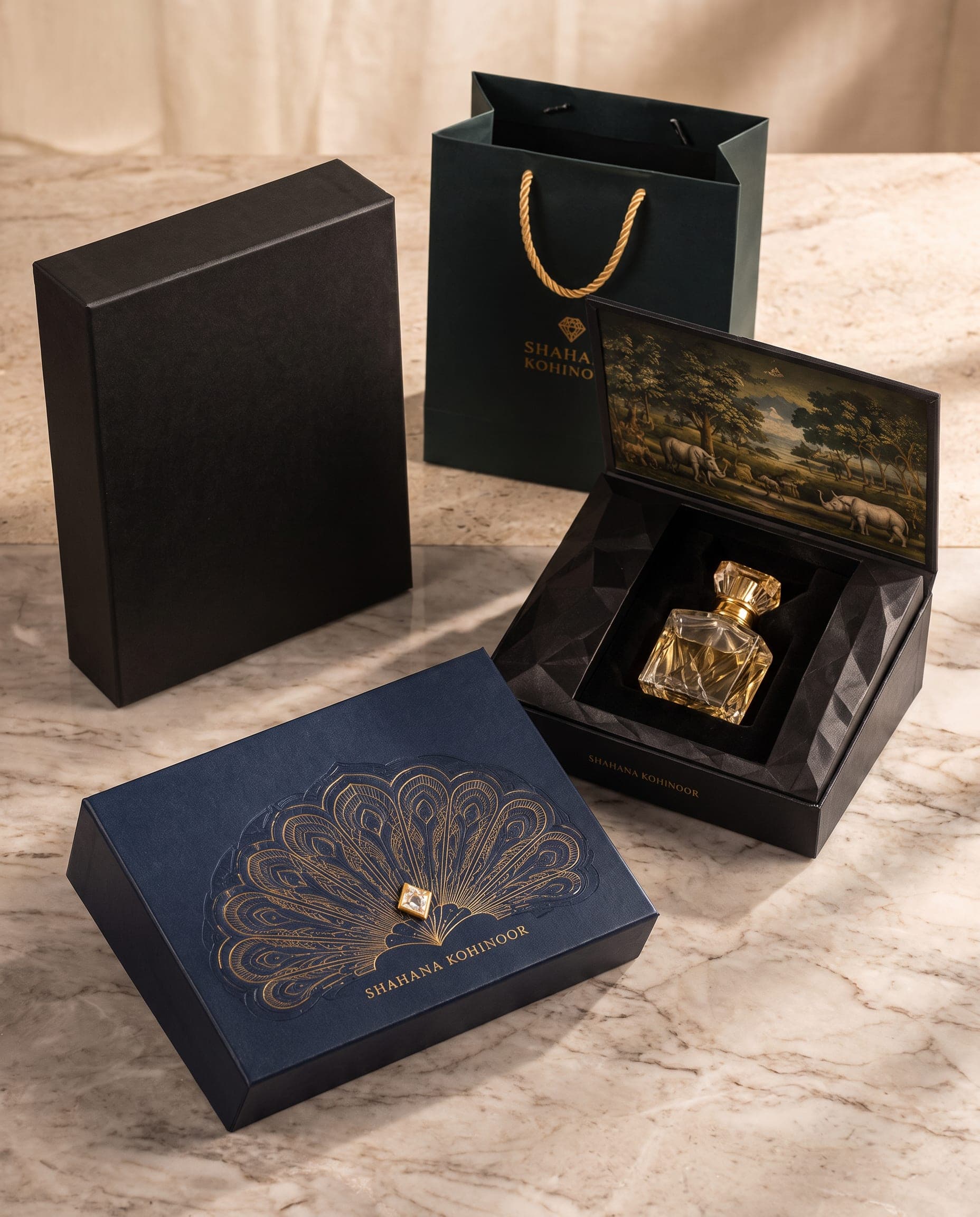
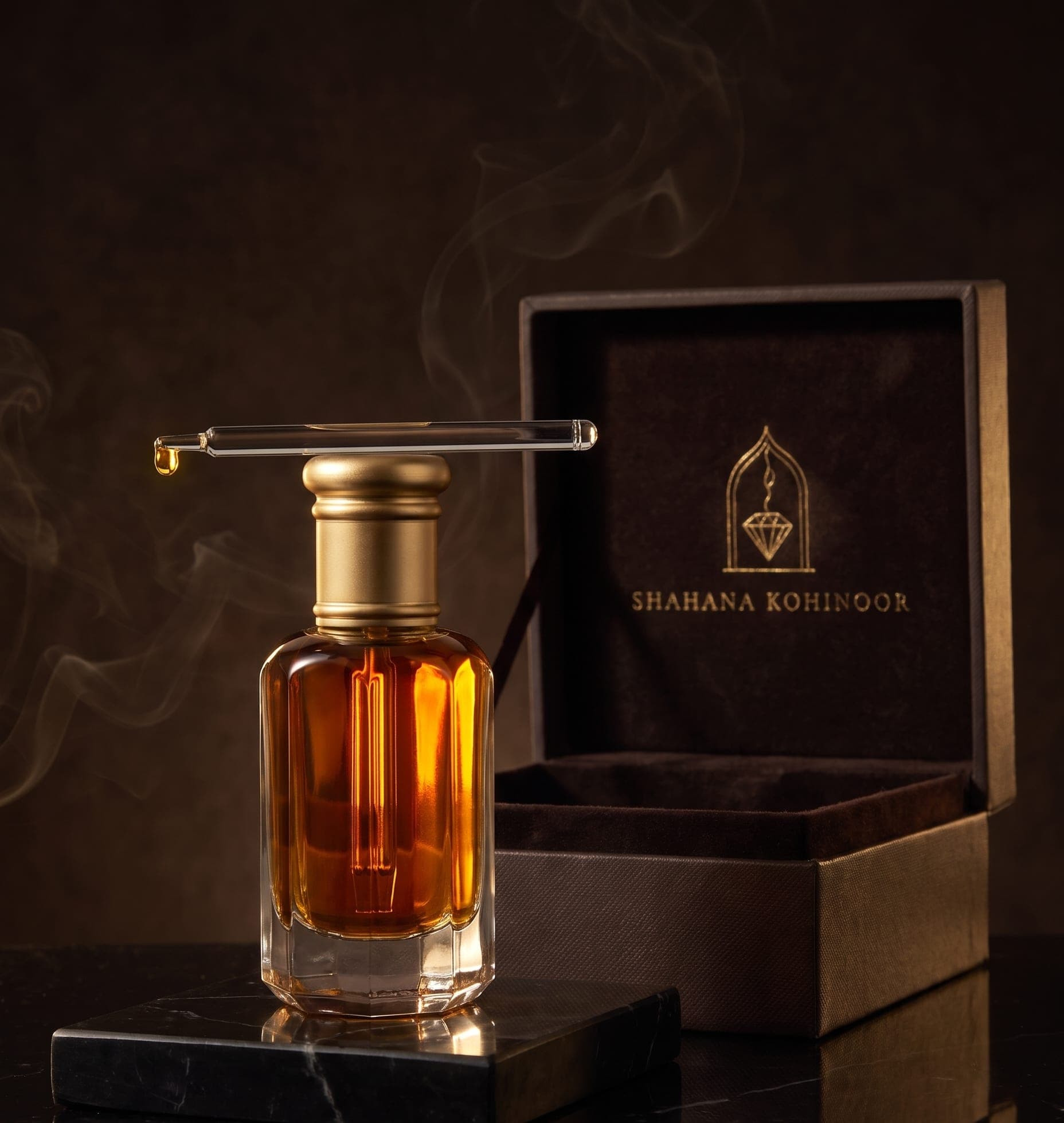
Oud oil from our own fields in Assam
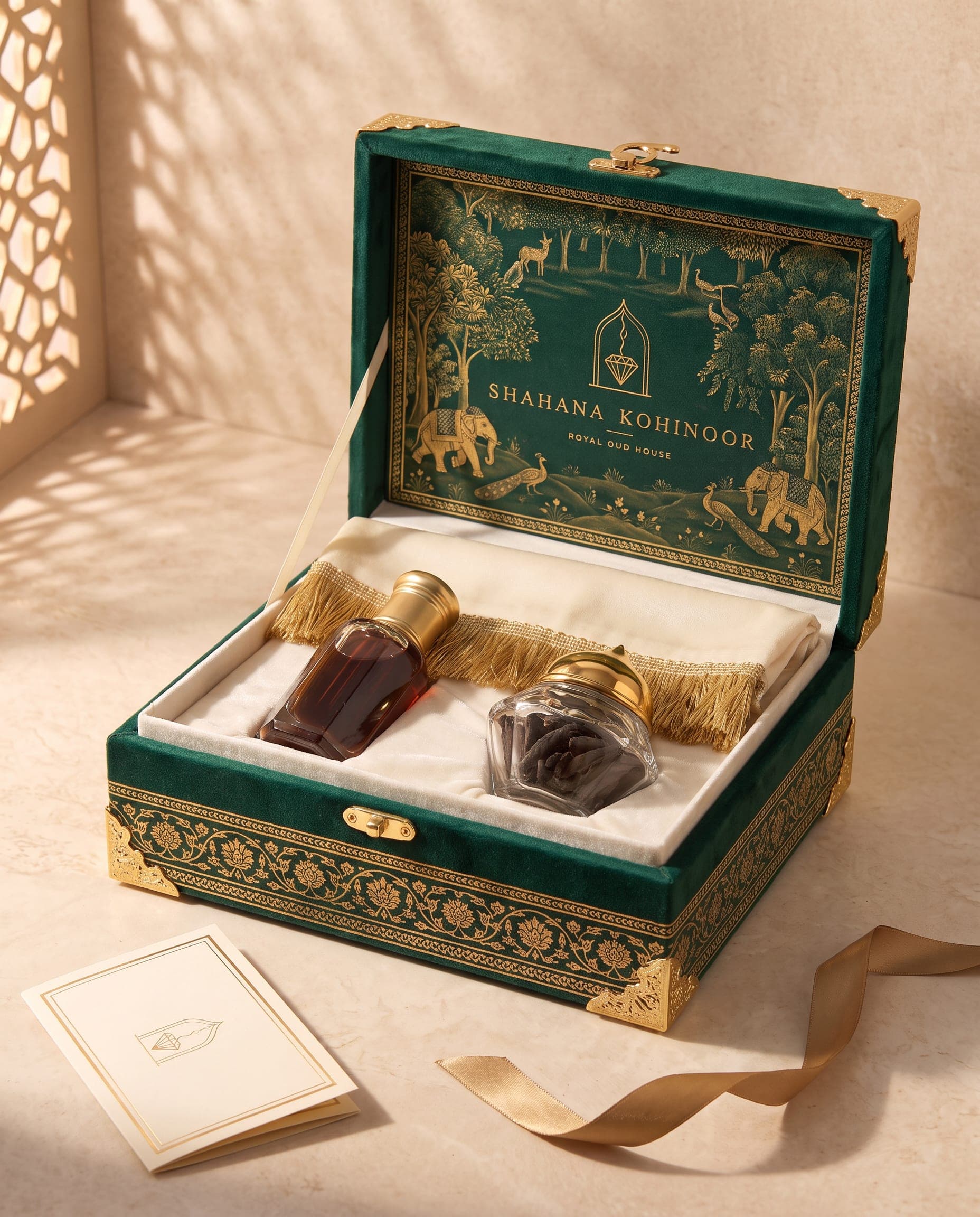
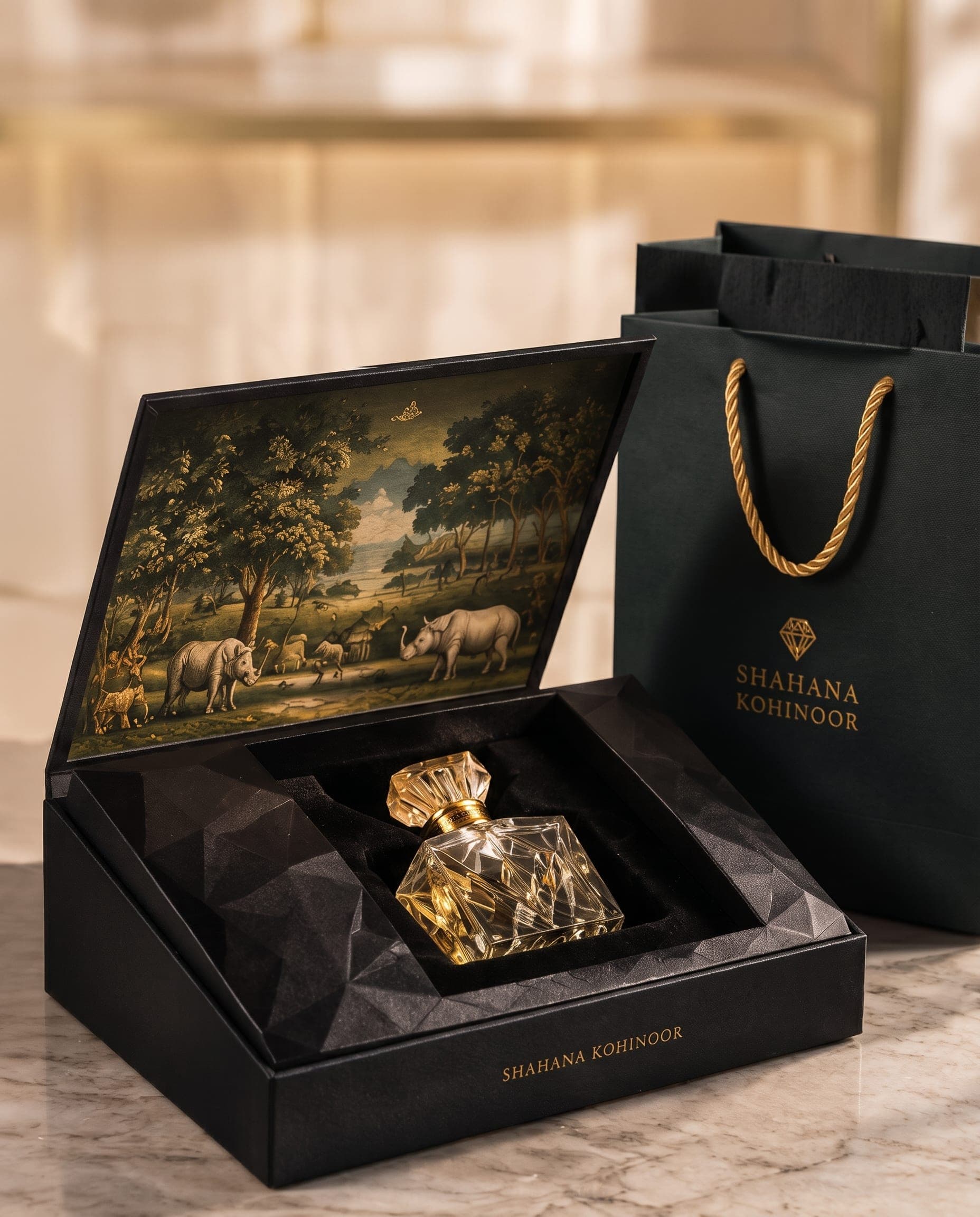
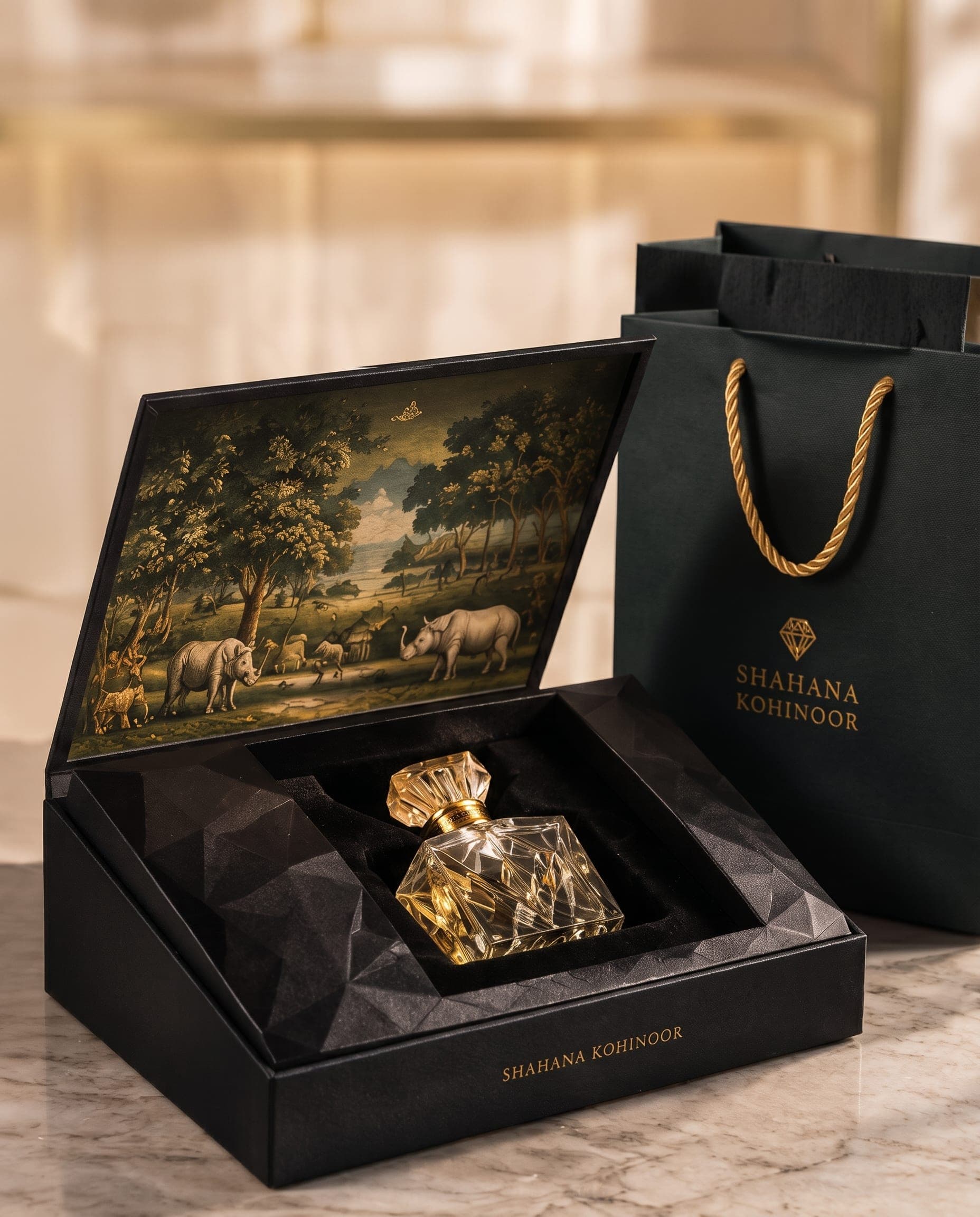
A dark, slow-moving oil drawn from the resin-rich heartwood of trees grown in our own fields in Assam. Smoky and leathered when it first meets the skin, it settles over hours into honeyed wood and a warm balsamic glow that stays on skin and cloth into the next day.
Hand-delivered 1–3 working days across the Kingdom of Bahrain.
Complimentary on orders over BHD 30.000; otherwise BHD 2.000.
Cash on delivery available. Delivery & returns
Oud Oil · 2 ranges
Dehn al Oud
Distilled from the heartwood of our own trees in Assam.
In the Gulf, dehn al oud is less a perfume than a language. It is worn to the mosque on Friday, to weddings and to Eid; it is offered to guests and passed between families as a gift that says more than words. A few drops, kept in a small crystal bottle, have long been one of the most treasured things a household owns.
Some of the most celebrated of it has always come from Assam. Agarwood — agaru in Sanskrit — grows natively in its forests, and records from the seventh century tell of the kings of Kamarupa, ancient Assam, sending it as a royal gift. Early Arabic writers called it al-ʿūd al-hindī, “the Indian wood”, and for generations the town of Hojai in Assam has traded its wood and oil westward across the Arabian Sea to the Gulf — the same journey this bottle makes to you.
Our oil is distilled from agarwood grown in our own agarwood fields in Assam, India. Because the trees are ours, every batch can be traced from the field to your hands: enter the batch number from your box on our Trace your bottle page to see its field, harvest, distillation and certificates.
An agarwood tree is pale and almost scentless. Only when it is wounded — by storms, insects or a fungus entering the bark — does it begin to defend itself, slowly flooding its heartwood with a dark, fragrant resin. Left to nature, this can take decades, and only a fraction of trees ever form it.
Grown by us, priced fairly
Most oud changes hands many times — grower, collector, trader, distiller, wholesaler, brand — and each adds a margin. Ours does not. We grow the trees, harvest the wood and distil the oil ourselves, so what you pay for is the oud itself, at a fair price for its grade, not a chain of middlemen.
Every distillation is a little different. Each batch’s own profile is recorded with its batch number.
Freshly distilled oud is sharp and restless. Rested in sealed glass, away from light, it rounds and deepens: the smoky edges soften and the sweeter woods come forward. Like a fine wine, a well-kept oil continues to evolve in your bottle — store it upright, tightly closed, in a cool, dark place.
Our Aquilaria trees grow for many years in our own fields in Assam, tended by the people who will one day harvest them.
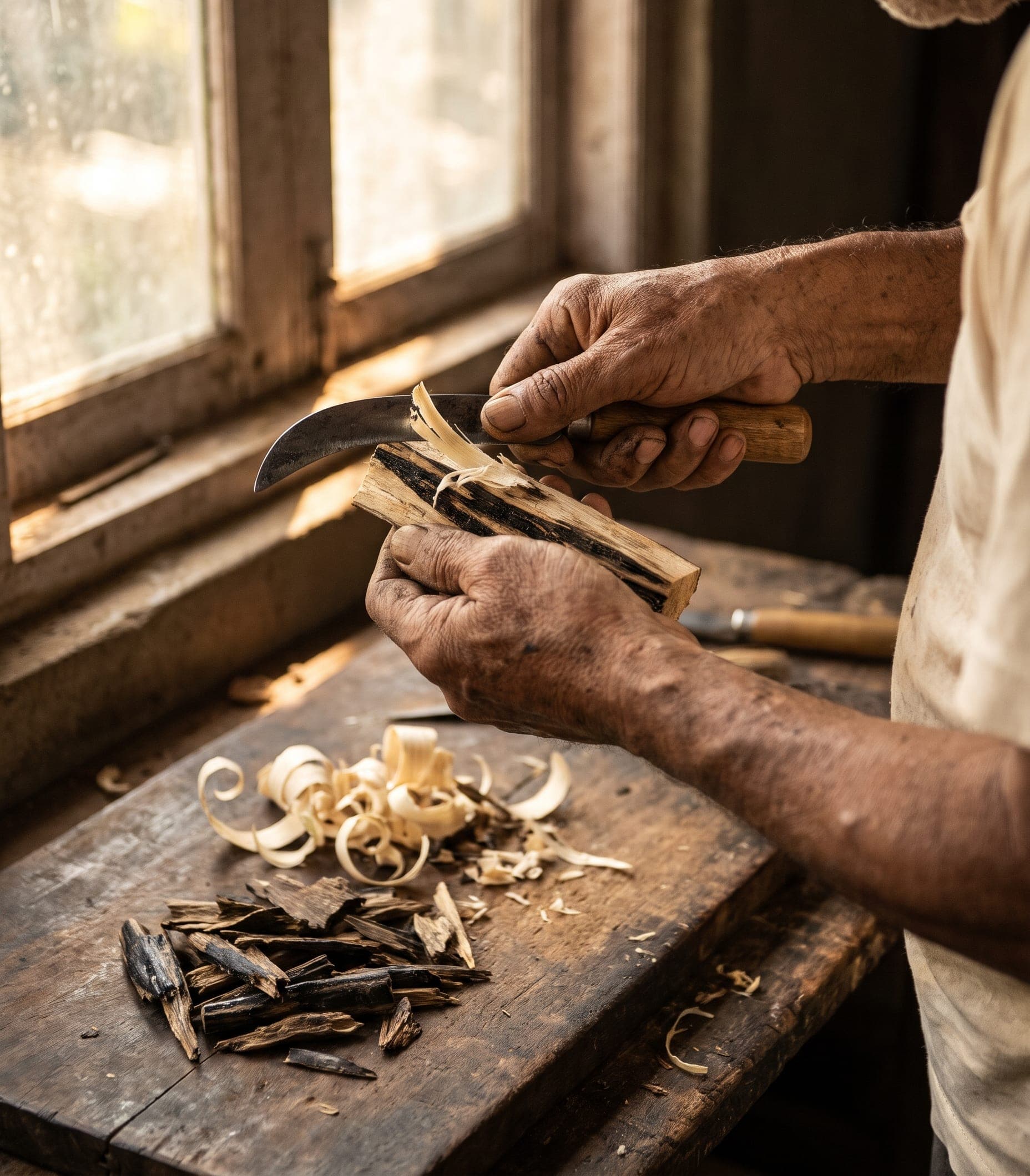
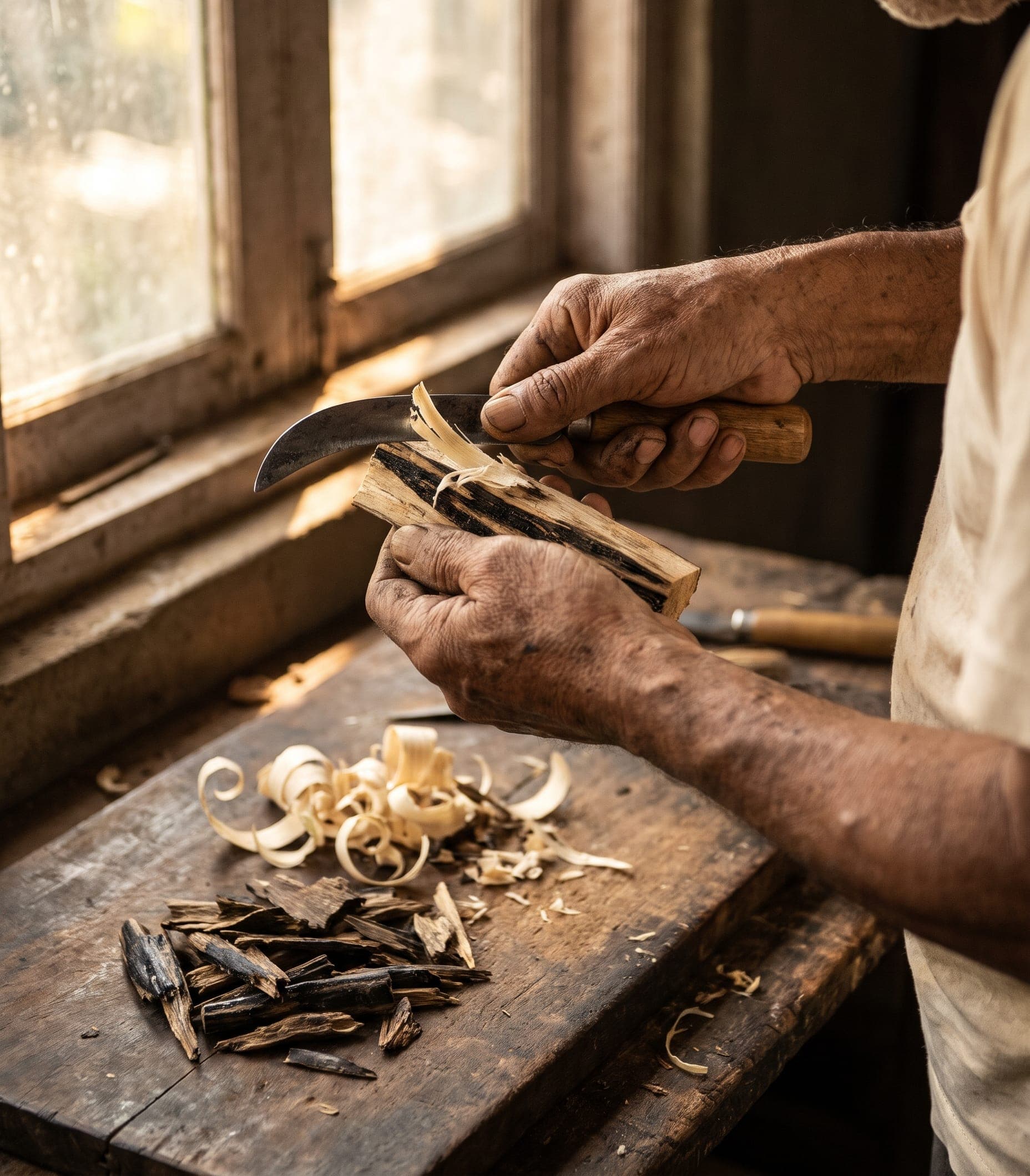
Resinous heartwood is separated from pale wood by hand, chip by chip, with small curved knives.
The wood is ground and steeped in water for weeks, softening the fibres so the resin can release.
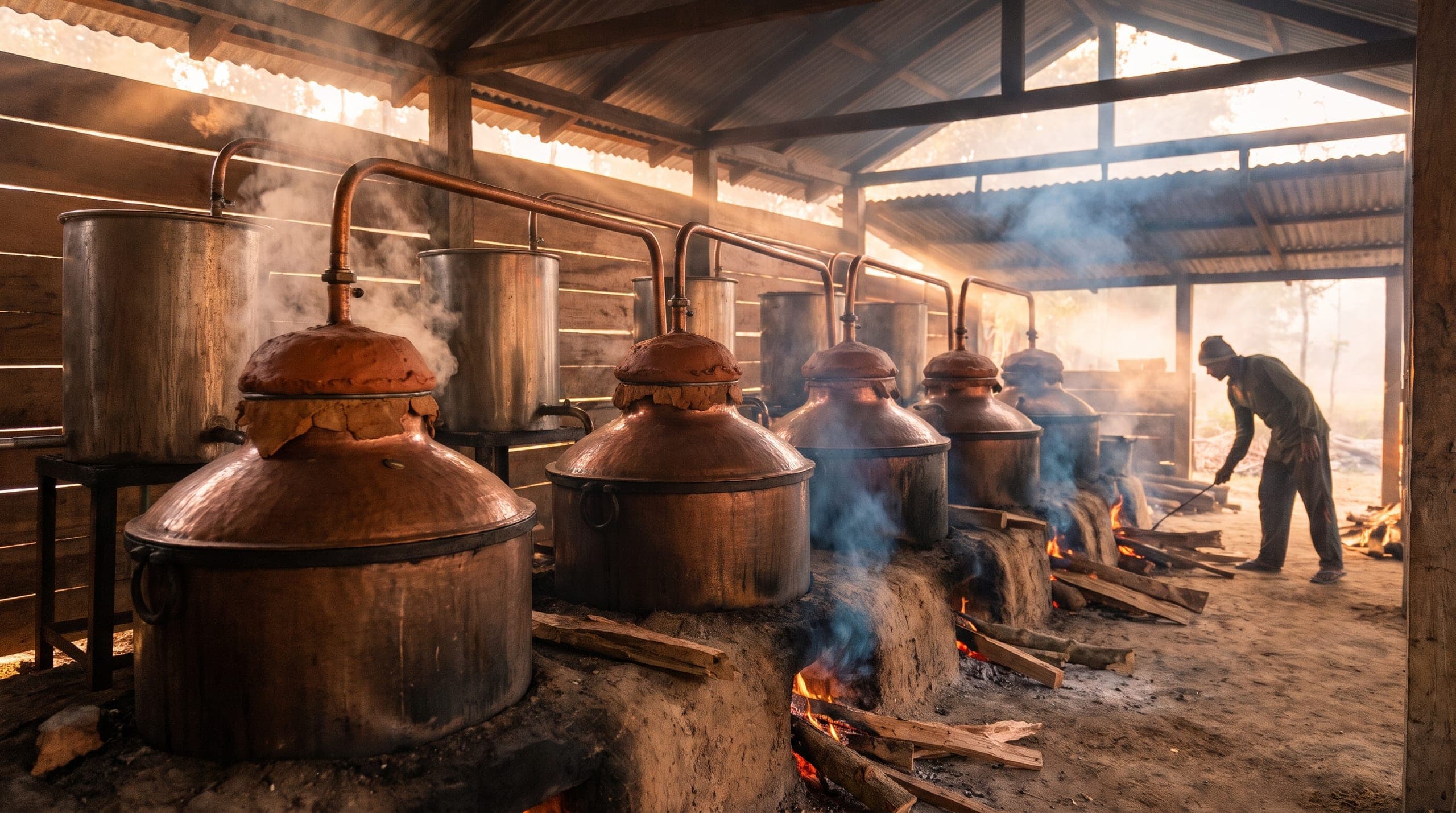
Over many days, the soaked wood is slowly distilled in large stills; the steam carries the oil into cooled condensers.
The oil rises above the water and is gathered by hand, a little at a time. Many kilos of wood yield only a few tolas of oil.
The finished oil rests in sealed glass before it is decanted into crystal.
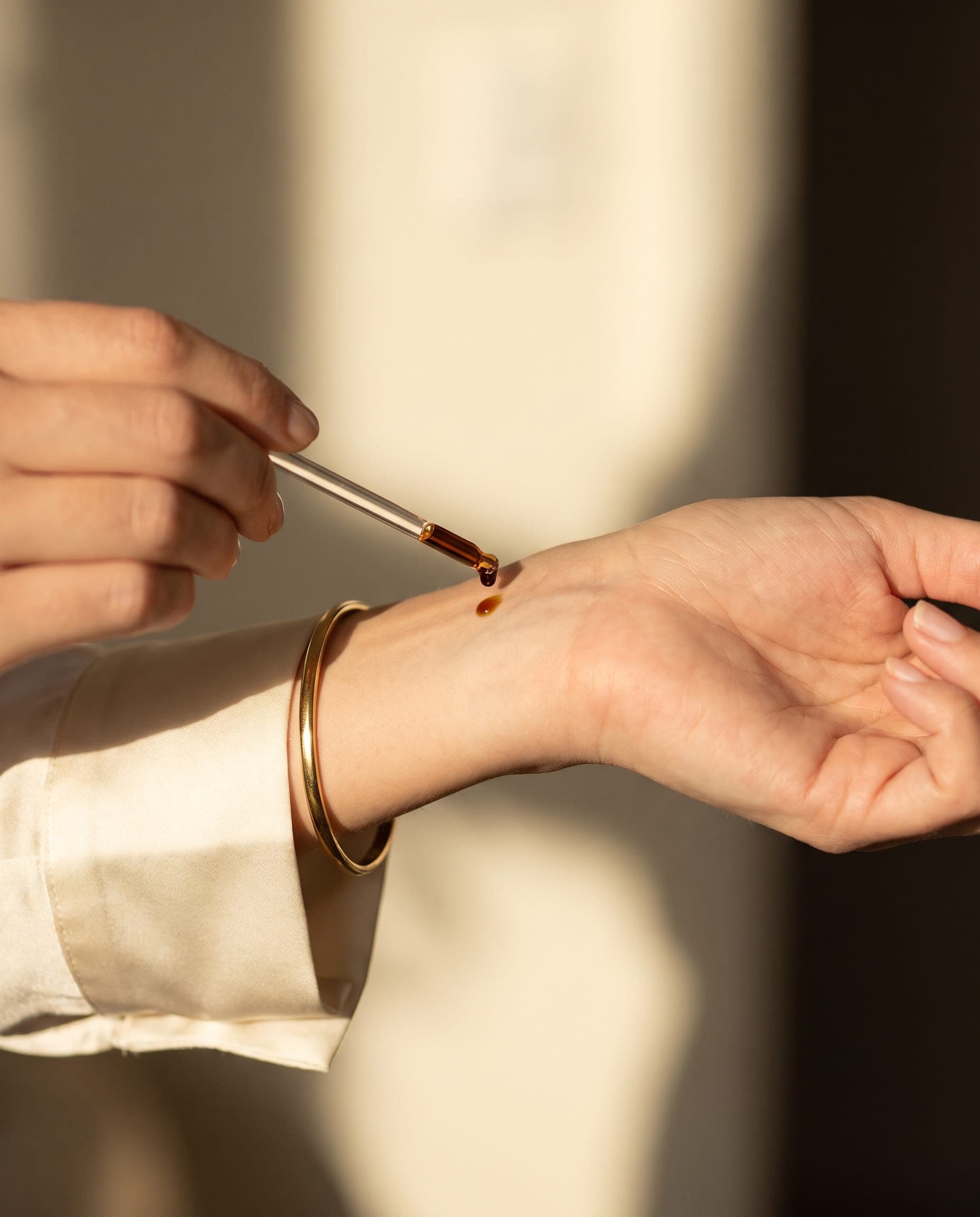
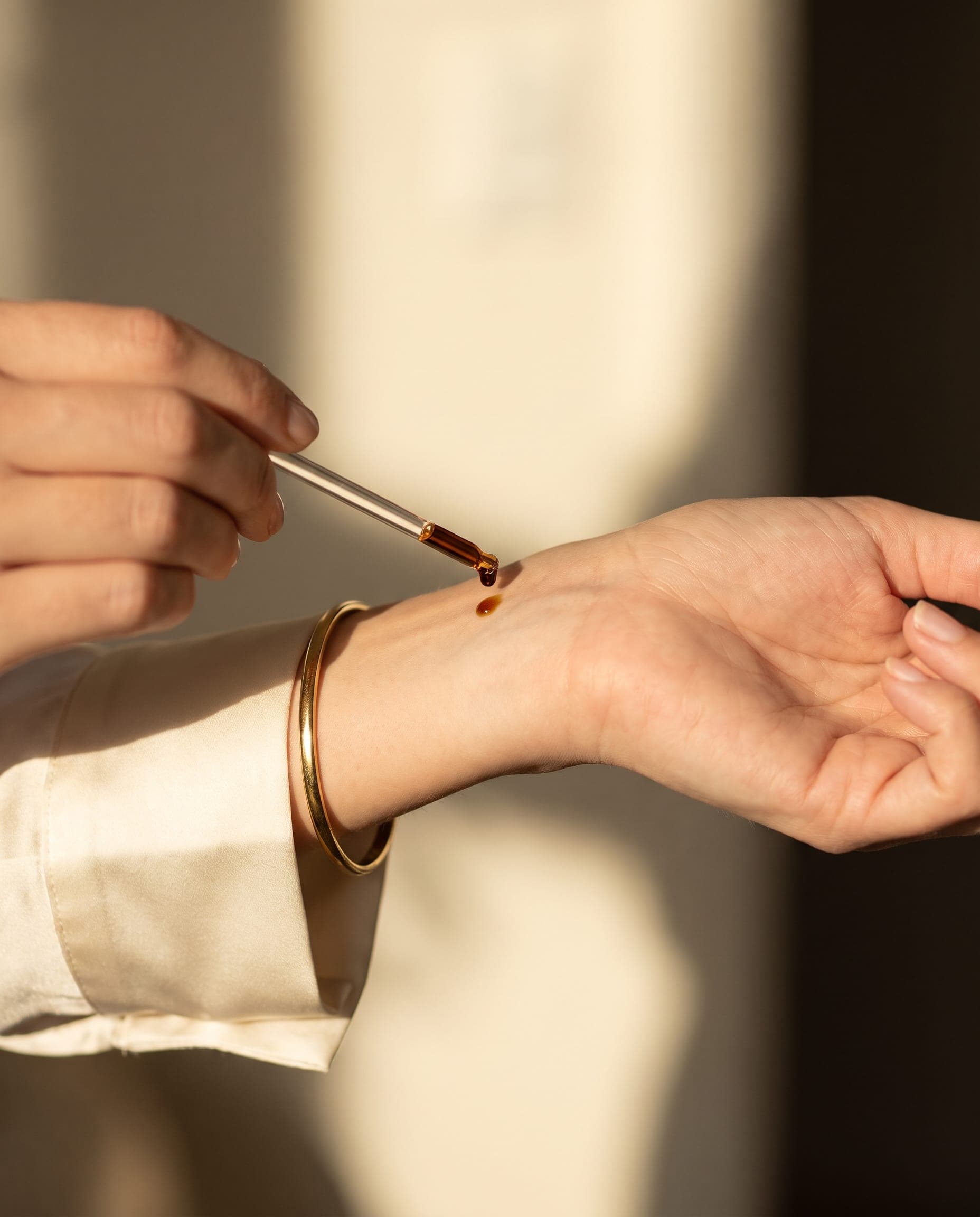
Take a single touch from the glass applicator. Oud is concentrated — one drop is enough.
Apply to pulse points: inside the wrists, behind the ears, at the base of the throat, or the beard.
Press, do not rub. Rubbing breaks the oil’s slow unfolding.
Wear alone, or beneath a perfume to give it depth and staying power.
Oud oil is dark and can mark light fabrics — test on a hidden area first.
Registration of our agarwood plantations with the forest authorities in Assam.
Certificate to be published
Confirms each shipment originates in India.
Certificate to be published
Plant-health certification issued for export of the wood and its products.
Certificate to be published
Required for all international trade in agarwood (CITES Appendix II).
Certificate to be published
Independent chemical profile of each oil batch, to detect adulteration.
Certificate to be published
Enter the batch number from the card in your box to see the certificates for your own bottle.
Trace your bottle →
Our fields in Assam
Location and records of the agarwood fields our wood comes from.
Document to be published
Harvest & distillation
Who harvested the wood and distilled the oil — our own people, named.
Document to be published
Batch record
Batch number, distillation date and quantity for each release.
Document to be published
Laboratory analysis (GC-MS)
Independent gas chromatography–mass spectrometry report.
Document to be published
CITES permits
Agarwood (Aquilaria spp.) is listed in CITES Appendix II; export and import permits for each shipment.
Document to be published
Harvest photographs
Photographs from our fields, the harvest and the distillery.
Document to be published